A tidy closet can make busy mornings easier and help you get more use from the clothes you already own. The key is not simply arranging everything once. A closet stays organized when it is set up for your daily habits and maintained with a few simple routines.
You do not need expensive storage products or a large walk-in closet to make a difference. With thoughtful sorting, practical storage, and regular resets, almost any closet can become more useful and easier to manage.
Start With a Complete Closet Reset
Before buying hangers, bins, or shelves, take everything out of the closet. Working with an empty space makes it easier to see what you have and how much room is available.
Place your clothing and accessories in groups, such as:
– Shirts and tops
– Pants and jeans
– Dresses and suits
– Sweaters and jackets
– Shoes
– Bags and accessories
– Seasonal items
– Items that need repair or cleaning
As you sort, check each item and ask a few practical questions:
– Does it fit comfortably?
– Have I worn it in the past year?
– Is it in good condition?
– Does it suit my current lifestyle?
– Would I choose to wear it again?
Create separate piles for items to keep, donate, repair, recycle, or decide on later. Try not to let the “decide later” pile become a permanent storage area. Give yourself a deadline to review it within a week.
Keep Only What You Use
A closet is easier to organize when it holds fewer items. This does not mean you need to create a minimal wardrobe. It simply means that everything in the closet should earn its space.
Set aside clothing that no longer fits, feels uncomfortable, or does not match your current needs. Keep special occasion pieces if you use them, but store them in a clearly marked area rather than mixing them with everyday clothing.
Avoid keeping items because they were expensive or because you might wear them someday. If an item has been untouched for years, it may be taking up space that could be used for clothing you enjoy wearing now.
For sentimental pieces, consider storing a small number in a labeled box outside the main closet. This protects them while keeping your everyday storage easier to use.
Group Similar Items Together
Once you have decided what to keep, arrange similar items in groups. This makes it easier to find what you need and quickly notice what you own.
You might organize clothing in this order:
- Everyday tops
- Work or formal clothing
- Pants and skirts
- Dresses
- Sweaters
- Jackets and coats
Within each group, arrange items by color, length, or frequency of use. Choose the system that feels most natural to you. Color sorting can make a closet look neat, while grouping by use may make getting dressed faster.
For example, you could keep work clothing together, casual clothing together, and special occasion pieces in a separate section. If you often dress by outfit, consider hanging complete outfits together for especially busy days.
Choose Storage That Fits Your Habits
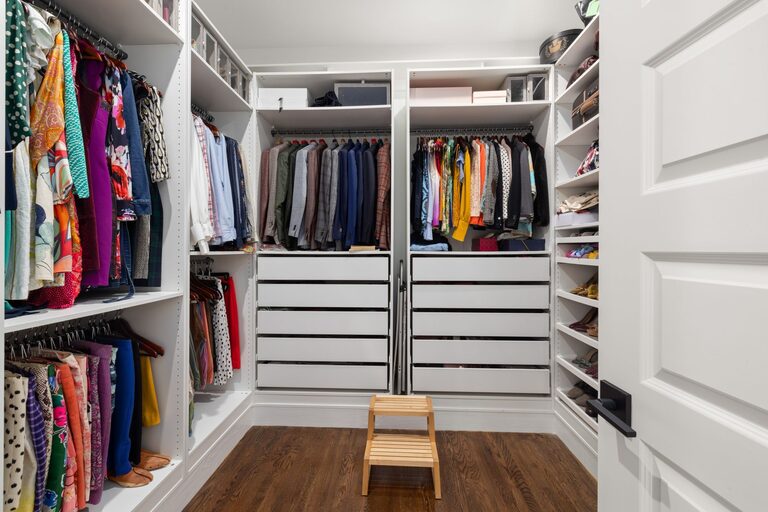
Storage products are most helpful when they solve a specific problem. Measure your closet before purchasing anything, and avoid filling the space with organizers that make it harder to reach your belongings.
Use matching hangers if possible. Slim hangers can save space, while sturdy wooden or padded hangers may be better for heavier clothing. Keep hanging items facing the same direction so the closet looks orderly and clothing is easier to remove.
Useful storage options include:
– Shelf dividers for folded clothing
– Clear boxes for shoes or accessories
– Small bins for scarves, belts, and hats
– Drawer organizers for smaller items
– Hooks for bags and frequently used accessories
– High shelves for seasonal clothing
Do not overfill shelves or drawers. When storage is packed too tightly, items become difficult to see and put away. Leave a little open space so clothing can be returned without disturbing everything else.
Fold Clothing for Visibility
The way you fold clothing can affect how well your system works. Instead of stacking many shirts in a tall pile, fold them vertically in drawers or bins when possible. This allows you to see each item without removing the entire stack.
For shelves, keep folded piles low and separate them by type. For example, create one pile for T-shirts, another for sweaters, and another for workout clothing.
Heavy sweaters are often better folded than hung, since hanging can stretch the fabric. Delicate items may also need special care. Follow the care instructions on the label and use storage that protects the shape of the garment.
Make Shoes and Accessories Easy to Reach
Shoes and accessories can quickly make a closet look messy because they are often small, unevenly shaped, and used frequently.
Keep everyday shoes near the front of the closet or at floor level. Place formal or seasonal shoes higher up or farther back. Use a shoe rack, shelf, or labeled boxes to keep pairs together.
For accessories, group similar items in small containers. You can use one bin for belts, one for scarves, and another for hats. Hooks can work well for bags, but avoid hanging too many on one hook because items may become difficult to remove.
If you store jewelry in the closet, use a compartmented tray or organizer to prevent tangles. Keep frequently worn pieces in the most accessible section.
Create a Seasonal Storage Routine
Seasonal rotation can free up valuable space. At the start of each season, move weather-specific clothing to the easiest-to-reach areas and store items you will not need for several months.
Before storing seasonal clothing:
– Wash or clean items according to their care instructions
– Repair missing buttons or small tears
– Make sure clothing is completely dry
– Use breathable containers when appropriate
– Label each container clearly
Store seasonal items on high shelves, under the bed, or in another dry storage area. Avoid placing delicate clothing in damp or poorly ventilated spaces.
Use labels such as “winter sweaters” or “summer accessories” so you can find items quickly when the season changes.
Leave Room for New Items
An organized closet needs some empty space. A useful rule is to leave a small gap on each shelf and between sections of hanging clothing. This makes the closet easier to use and reduces the chance of creating crowded piles.
When you bring home something new, decide where it will go before putting it away. If there is no suitable space, consider whether another similar item should be donated or removed.
You can also follow a simple one-in, one-out guideline for categories that tend to grow, such as shoes, jackets, or jeans. This keeps the total number of items manageable.
Build a Quick Daily Reset
Small habits prevent clutter from returning. After getting dressed, place worn clothing in a hamper, return shoes to their spot, and hang or fold anything that is still clean.
At the end of the week, spend five to ten minutes resetting the closet. Put misplaced items away, straighten shelves, and remove anything that does not belong.
If you share the closet with others, give each person clearly defined sections. Simple boundaries make it easier for everyone to maintain the system.
Review the Closet Regularly
Your needs and routines change over time, so your closet should be reviewed occasionally. Every few months, check for clothing that no longer fits your lifestyle, items that need repairs, and categories that have become overcrowded.
A regular review does not need to be a major project. Even a short seasonal check can prevent clutter from building up again.
The best closet system is one that feels easy to maintain. Keep the items you use, store them where they are easy to see, and create routines that match the way you live. With a little consistency, a tidy closet can stay organized long after the initial cleanup.
About the Author