A small kitchen can be comfortable, efficient, and enjoyable to use when every tool has a purpose. The goal is not to fill your cabinets with specialized gadgets. Instead, choose versatile items that handle several tasks, store easily, and support the meals you prepare most often.
With the right equipment, even a compact kitchen can support everything from quick breakfasts to weekend baking. Here are the essential tools worth making room for.
Start With the Basics
Before buying extra equipment, focus on dependable tools that you will use regularly. A small collection of well-chosen items is usually more useful than a large collection of single-purpose gadgets.
Chef’s Knife
A sharp chef’s knife is one of the most valuable tools in any kitchen. It can chop vegetables, slice meat, mince herbs, and prepare many other ingredients.
Choose a knife that feels comfortable in your hand. A medium-sized blade is often easier to control in a small kitchen than an oversized model. Store it in a knife block, blade guard, or magnetic strip to keep it safe and protect the edge.
Paring Knife
A paring knife is useful for small, detailed tasks. Use it to peel fruit, trim vegetables, remove stems, or cut small ingredients.
Because it is compact, it can be stored in a drawer without taking up much space. A chef’s knife and paring knife together cover most everyday cutting needs.
Cutting Board
A cutting board protects your counters and gives you a stable surface for food preparation. Look for a board that is large enough for comfortable chopping but small enough to store vertically or inside a cabinet.
A board with a handle or a built-in groove can be especially practical. Choose a material that is easy to clean and maintain. If possible, use separate boards for produce and raw meat to support good kitchen hygiene.
Choose Versatile Cooking Equipment
The best cookware for a small kitchen is flexible enough to work across several types of meals.
One Good Skillet
A sturdy skillet can be used for frying, sautéing, roasting, reheating, and even baking, depending on the design. A 10- or 12-inch skillet is a useful size for many households.
A stainless steel, cast iron, or nonstick skillet can work well. Consider your cooking habits, storage space, and cleaning preferences when choosing one. A skillet with a comfortable handle and a flat base is especially useful on a small stovetop.
Medium Saucepan
A medium saucepan is ideal for heating soup, cooking grains, making sauces, boiling eggs, and preparing small portions of pasta or vegetables.
A lid helps retain heat and can reduce cooking time. If cabinet space is limited, look for cookware with a flat lid or a handle designed for compact storage.
Stockpot or Multipurpose Pot
You may not need a very large stockpot, but a medium multipurpose pot can be helpful for pasta, soup, steamed vegetables, and one-pot meals. Choose a size that fits your stovetop and sink comfortably.
If the pot is too large to clean or store easily, it may become an item you avoid using. Practical size matters more than maximum capacity in a small kitchen.
Baking Sheet
A rimmed baking sheet can handle roasted vegetables, sheet-pan meals, cookies, toast, and reheating. It is one of the most flexible pieces of cookware available.
Look for a model that fits your oven with room around the edges for proper air circulation. If cabinet storage is tight, store it vertically beside a cutting board or inside the oven when the oven is completely cool.
Add Space-Saving Preparation Tools
A few simple preparation tools can make cooking faster without crowding your counters.
Mixing Bowls
A set of nesting mixing bowls takes up less room than several individual bowls. Use them for combining ingredients, washing produce, serving salads, or storing leftovers.
A set with three different sizes is often enough for everyday cooking. Stainless steel bowls are lightweight and durable, while glass bowls can double as serving dishes.
Measuring Cups and Spoons
Accurate measurements are helpful for baking, sauces, dressings, and many recipes. A compact set of measuring cups and spoons is easy to store and can be placed on a hook or inside a drawer organizer.
A liquid measuring cup is also useful for water, milk, broth, and other pourable ingredients. Choose a clear model with easy-to-read markings.
Box Grater
A box grater can shred cheese, grate vegetables, zest citrus, and create crumbs from firm ingredients. It replaces several specialized tools while taking up little space.
If a box grater feels too bulky, a flat handheld grater is a smaller alternative. However, a box model usually offers more functions in one tool.
Colander
A collapsible colander is especially useful in a small kitchen. It can drain pasta, rinse produce, and wash grains, then fold flat for storage.
If you prefer a traditional model, choose one that fits inside your sink or nests over a cooking pot. This helps keep water and food preparation contained in one area.
Select Helpful Hand Tools
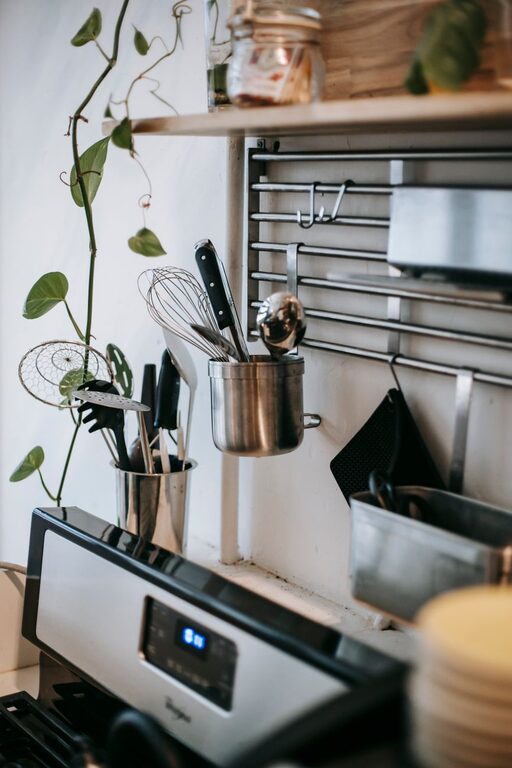
Hand tools are inexpensive, easy to store, and useful for many recipes.
Consider adding these essentials:
– Silicone spatula for scraping bowls and folding ingredients
– Wooden spoon for stirring soups, sauces, and cooked vegetables
– Tongs for turning food and serving pasta or salad
– Whisk for eggs, dressings, sauces, and batters
– Vegetable peeler for potatoes, carrots, and other produce
– Can opener for canned ingredients
– Ladle for soups, stews, and sauces
– Slotted spoon for lifting food from cooking liquid
– Kitchen shears for herbs, packaging, and small cutting jobs
You do not need every style or size. Start with the tools that match your regular cooking routine. For example, someone who cooks many soups may use a ladle often, while someone who prepares mostly quick skillet meals may rely more on tongs and a spatula.
Make Room for Small Appliances
Small appliances can be useful, but they should earn their counter or cabinet space. Before buying one, consider how often you will use it and whether a manual tool can do the same job.
Electric Kettle
An electric kettle quickly heats water for tea, coffee, oatmeal, instant noodles, and cooking. It can also reduce the time needed to boil water on the stovetop.
Choose a compact model with a clear water level and an automatic shutoff feature. Store it near the area where you prepare hot drinks or breakfast.
Toaster Oven
A toaster oven can toast bread, reheat leftovers, roast small portions, and bake simple dishes. Some models can also broil or air fry.
It may replace a separate toaster and reduce the need to heat a full-size oven for small meals. Measure your counter before buying one and leave enough space around it for safe use.
Immersion Blender
An immersion blender is easier to store than a full-size blender and works well for soups, sauces, smoothies, and dressings. It can often blend ingredients directly in a pot or tall container.
Look for a model with removable parts that are easy to clean. If you rarely make blended foods, this may be an optional tool rather than a basic essential.
Improve Storage and Organization
Good organization is just as important as the tools themselves. Use vertical space whenever possible with shelf risers, wall hooks, or magnetic storage strips.
Keep frequently used tools near your preparation area and place occasional items in higher cabinets. Store cookware by nesting smaller pieces inside larger ones, using towels or protective liners between surfaces when needed.
Drawer dividers can prevent measuring spoons and small tools from becoming tangled. Clear containers or labeled bins can make pantry ingredients easier to find without adding clutter.
Build Your Collection Slowly
A small kitchen works best when each item has a clear role. Begin with a chef’s knife, cutting board, skillet, saucepan, baking sheet, mixing bowl, and a few basic hand tools. Add appliances or specialty items only when a repeated cooking need justifies them.
Choose durable, easy-to-clean products that fit your available space. By prioritizing versatility and organization, you can create a kitchen that feels open, practical, and ready for everyday meals.
About the Author